Academic Publication
Neideck, J., Stoneham, N., Park, Y., & Mckeague, M. c. (2022). “We’ll meet you underground”: transcultural performance practices in queer space and time. Australasian Drama Studies, (81), 203-236.
For almost three decades a creative community has flourished between Australia and South Korea, initiated by the work of the late theatre-maker Roger Rynd and his wife Catherine Pease. Roger’s sudden passing in 2010 heralded a period of intense international activity between artists in his orbit, a loose coalition committed to continuing his work of collaborating across language and culture. The work of these artists in maintaining Roger’s legacy is difficult to define, partially because of its wide-ranging form: from play-based work for children and families to bilingual musicals; from boutique adaptations of Brecht served with street food to dance theatre combining traditional Korean opera and expressionistic contemporary Japanese dance. In recent years, however, some of these artists – in this case, the four co-authors – have forged an identity built on the long-term development, nourishing and maintenance of interpersonal relationships that have continued in the wake of Roger’s passing. We call ourselves Company Bad.
Park, Y. (2022). Theatre-making in the age of #MeToo: Working cross-culturally toward a framework for making safer creative spaces [MPhil, Queensland University of Technology]. Brisbane.
This study describes a framework for creating safer, more inclusive environments for theatre-making in the age of #MeToo. The research involved cross-cultural qualitative analysis of interviews conducted with authors of theatre codes and standards from the US, Australia, the UK, and South Korea. It involved analysis of these documents and a bilingual online questionnaire targeting individual artists who have worked on their development. This research shows the positive impact that safer, more inclusive creative environments have on artists and on theatre-making processes, illustrating how cultural change might be achieved by building these spaces around a strong intersectional core.
Park, Y, Neideck, J & Heim, C. (2021) Traditional Korean Audiences and their Protest in the Madang Then and Now. Critical Stages
This article gives a brief introduction to and overview of the interactive role of traditional theatre audiences since the Joseon Dynasty (1392–1897) in the madang (public square) and then explore how contemporary Korean audiences also perform a collective and interactive “we” inherited from historical audience behaviour. The chapter concludes with an example of public square madang audience community performances: the Plaza Theatre festival in the Black Tent, in response to the conservative government blacklist of 2016-2017.
Korean Theatre Working Group. (2020). Korean Theatre Standards. https://kts-wg.com/
Before the #MeToo Movement, there was no theatre standards or codes of conduct for training and mentoring theatre artists in the South Korean theatre industry. Korean Theatre Standards (KTS) is the result of two years of collective theatre professionals endeavour to answer strong demands from the Korean public and the industry to foster safer and inclusive creative space for the artists. I have co-written KTS with six co-writers.
Park, Y & Neideck, J (2019) A single drop of water: Vulnerability, invisibility, and accountability in South Korea’s #MeToo movement. Manuscript submitted for publication.
In Korea, public performances of grief, allyship, and holding the government to account are hallmarks of democratic transformation. In this article currently under peer review, I discuss my story of workplace sexual harassment with my long-term collaborator Jeremy Neideck, and we attempt to weave a coherent narrative out of our months-long discussions about the social, cultural and political histories of Korea that may have allowed abusive relationships to develop in theatre companies such as Mokwha and Yeonhuidan. We also confront difficult questions regarding the effect that historical behaviour by an artist has on the currency,
relevance and ongoing life of their work.
Writing Work
| 2024-2025 | Sail Boat Home: 내 집은 어디인가 – Co-writing a play |
| 2022 | Jiha Underground- Co-writing adaptation of original music theatre work Jiha Underground The Footprint – Co-writing Bilingual Children’s book |
| 2019 | Chorale- Co-writing and collaborating multilingual music theatre between Company Bad and Debase productions |
| 2018 | Korea Theatre Standard – Co-writing with Korea Theatre Standard working group |
| 2017 | The Mystery of Laboratory B-123- Co-writing bilingual theatre for Young Audience |
| 2014 | Voice- Music monodrama for Korean National Theatre’s Mid-Summer Theatre Festival |
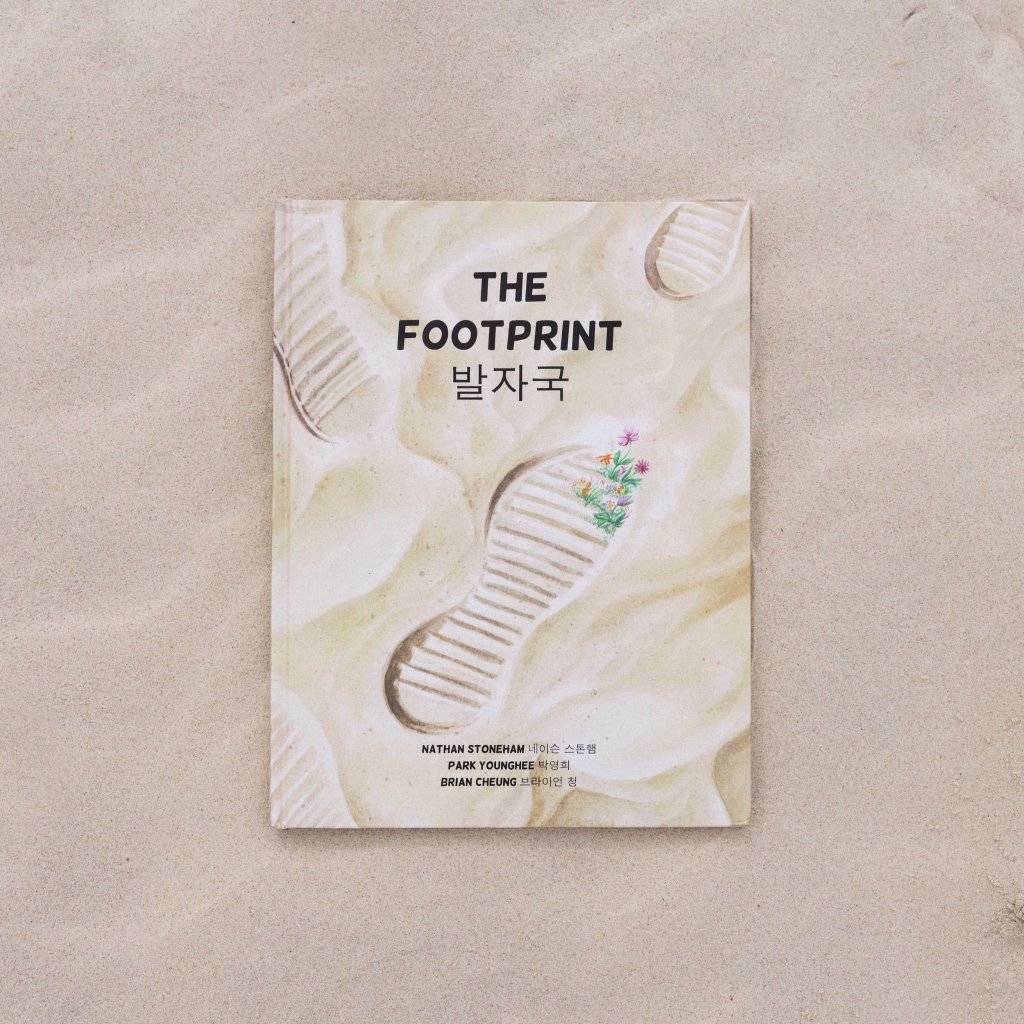
The Footprint 발자국
Written by Nathan Stoneham and Younghee Park, illustrated by Brian Cheung. A picture book about transforming our world through care.
Korean and English language are side by side in this hopeful tale for children today.
Learn more: https://www.thefootprintbook.com/

 PARK YOUNGHEE